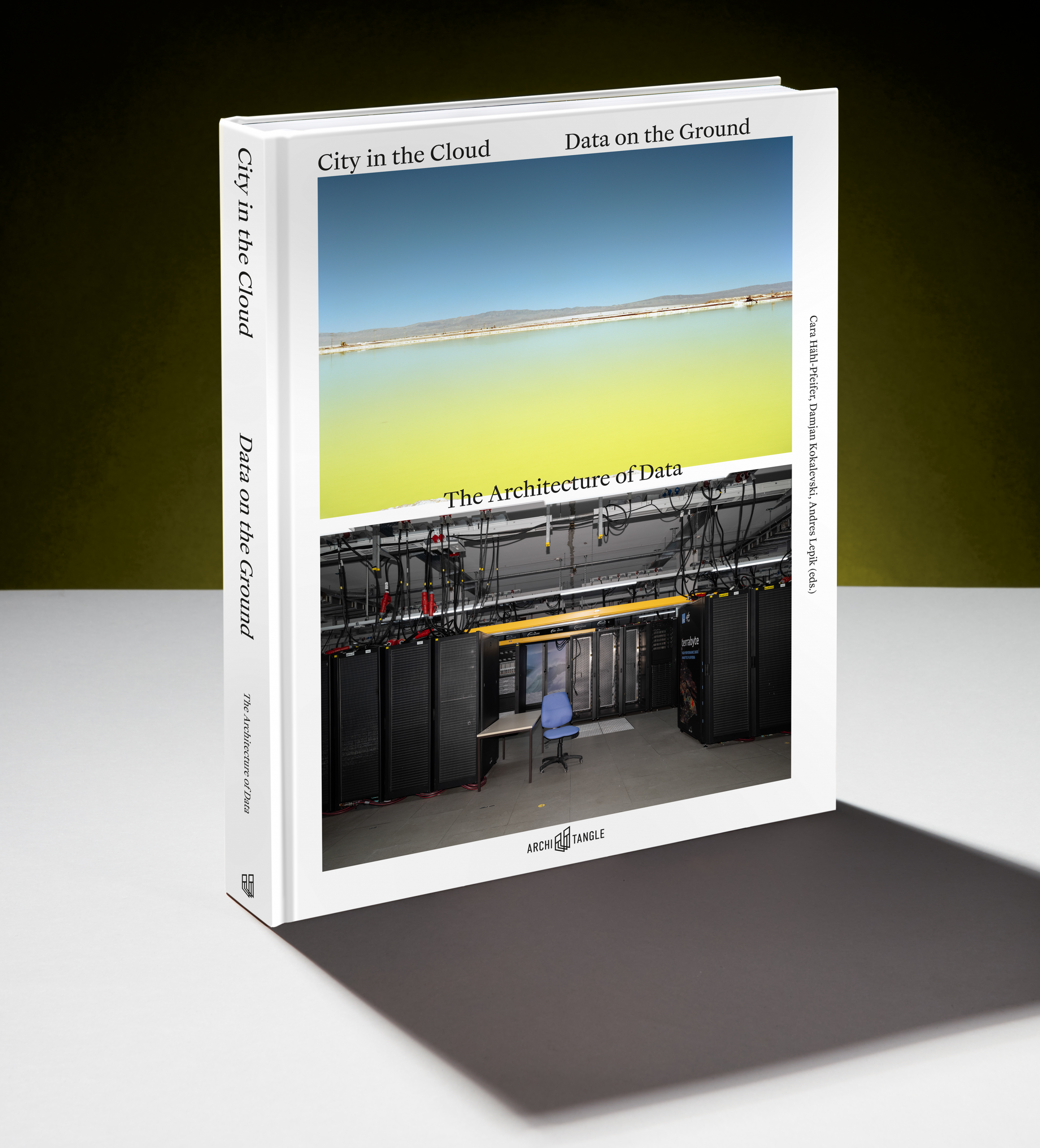
city in the cloud: data on the ground
The Architecture of Data
publication
2025
Published by ARCHITANGLE, edited by Cara Hähl-Pfeifer, Damjan Kokalevski, and Andres Lepik, available through the Cedon Museum Shop.
https://architangle.com/book/the-architecture-of-data


Research and Photography: Giulia Bruno
City in the Cloud – Data on the Ground investigates the hidden physical infrastructures behind the digital world.
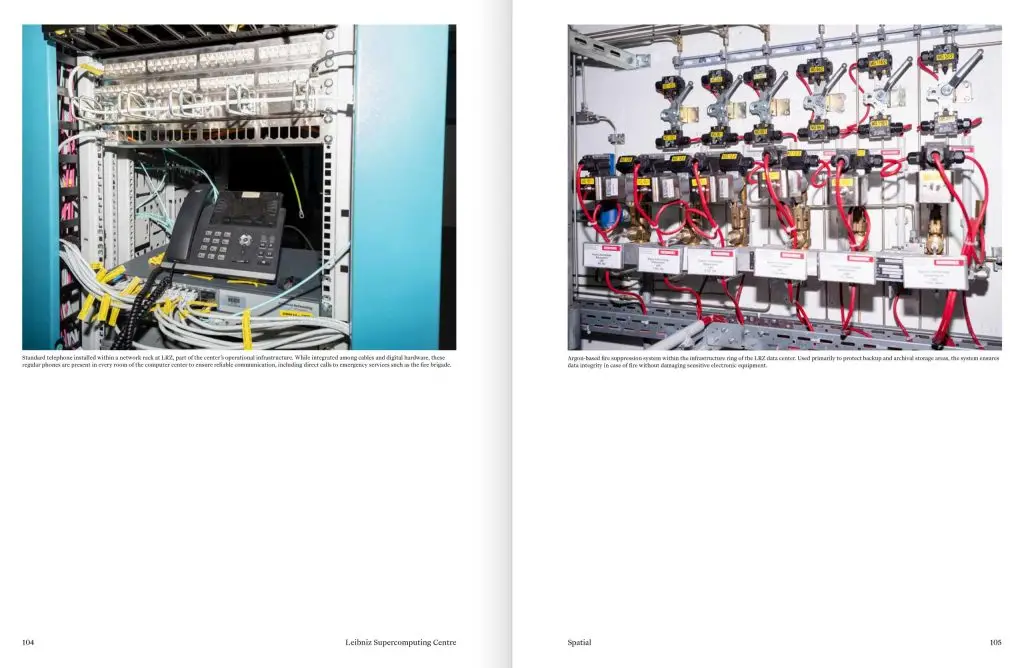
Data may appear immaterial, but it relies on extensive global networks: the extraction of raw materials, the deployment of thousands of undersea cables, and an exponentially growing number of energy-intensive data centers.
While these data infrastructures shape global economies and politics, they do far more by profoundly impacting local communities, ecosystems, and labor conditions — realms so often rooted in (neo)colonial structures of exploitation.
The contributions in this volume call for greater transparency, critical awareness, and care toward the material foundations of the data economy — as essential conditions for more equitable and accountable digital futures.
Bringing together voices from architecture, media studies, technology, art, and political theory, City in the Cloud – Data on the Ground explores the elemental, spatial, and temporal dimensions of the architecture of data. The volume maps the ecological, social, and political costs of living in a hyper-connected digital world and opens perspectives for rethinking digital infrastructures in the context of planetary resources, justice, and long-term responsibility.

With contributions by:
James Bridle, Giulia Bruno, Teresa Fankhänel, Cara Hähl-Pfeifer, Max Hallinan, Mél Hogan, Catherine Hyland, Damjan Kokalevski, Andres Lepik, Niklas Maak, Marija Marić, Anna-Maria Meister, Marina Otero Verzier, Trevor Paglen, Godofredo Enes Pereira, Andra Pop-Jurj, Alison Powell, Māra Starka, and Rafael Uriarte.
Cover Photo Giulia Bruno, Catherine Hyland 2025
Photo Giulia Bruno, 2025
Accessibility
Accessibility modes
Epilepsy Safe Mode
Dampens color and removes blinks
This mode enables people with epilepsy to use the website safely by eliminating the risk of seizures that result from flashing or blinking animations and risky color combinations.
Visually Impaired Mode
Improves website's visuals
This mode adjusts the website for the convenience of users with visual impairments such as Degrading Eyesight, Tunnel Vision, Cataract, Glaucoma, and others.
Cognitive Disability Mode
Helps to focus on specific content
This mode provides different assistive options to help users with cognitive impairments such as Dyslexia, Autism, CVA, and others, to focus on the essential elements of the website more easily.
ADHD Friendly Mode
Reduces distractions and improve focus
This mode helps users with ADHD and Neurodevelopmental disorders to read, browse, and focus on the main website elements more easily while significantly reducing distractions.
Blindness Mode
Allows using the site with your screen-reader
This mode configures the website to be compatible with screen-readers such as JAWS, NVDA, VoiceOver, and TalkBack. A screen-reader is software for blind users that is installed on a computer and smartphone, and websites must be compatible with it.